
Jaw Pain While Chewing – Could TMJ Dysfunction Be the Reason Behind Clicking and Restricted Mouth Opening?
Jaw Pain While Chewing – Could TMJ Dysfunction Be the Reason Behind Clicking and Restricted Mouth Opening?
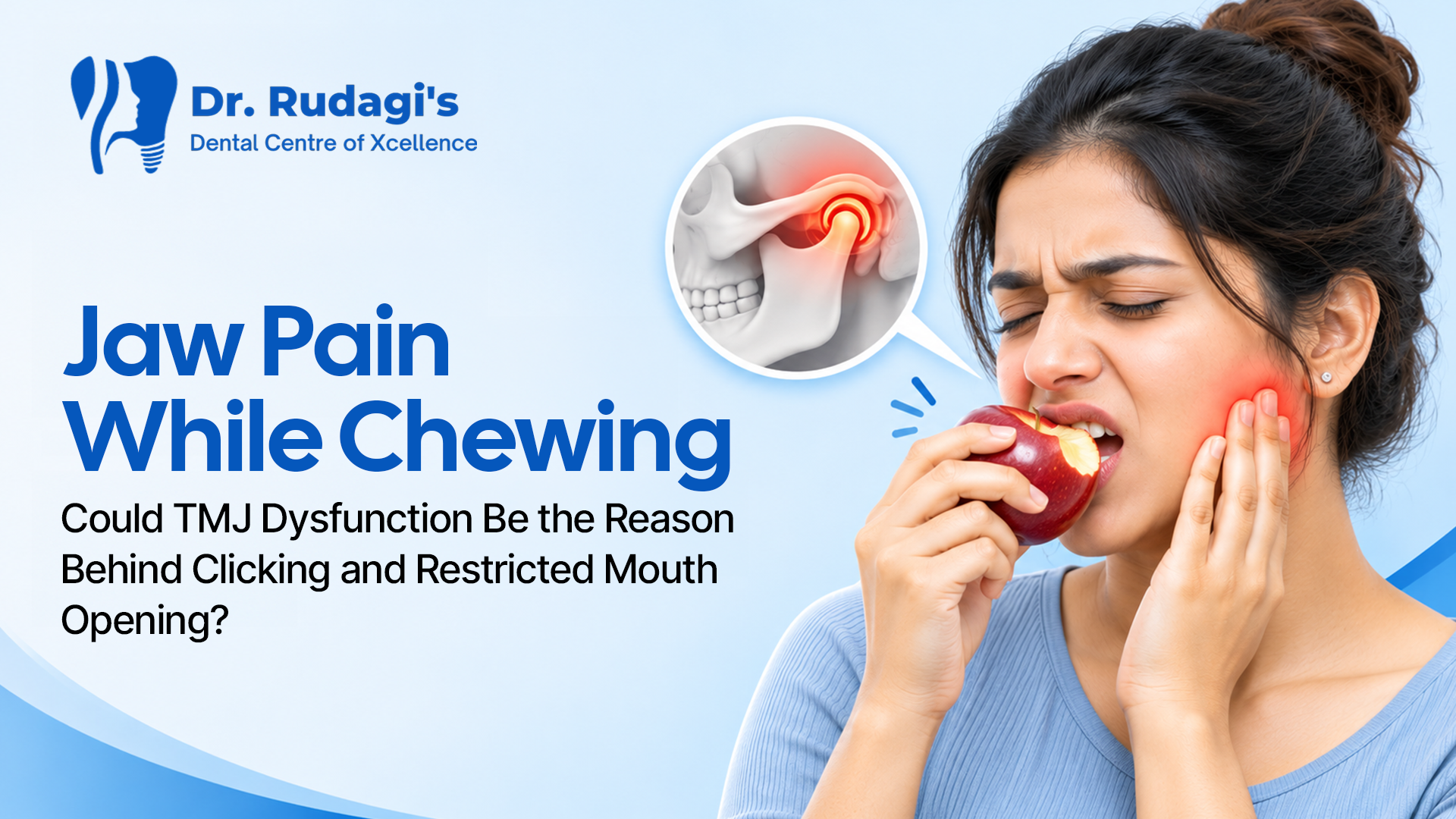
Have you ever experienced jaw pain while chewing, heard a clicking sound when opening your mouth, or struggled to open your mouth fully? These symptoms may seem minor initially, but when they continue or interfere with eating and speaking, they deserve attention.
One possible cause is temporomandibular joint dysfunction (TMD), a condition affecting the joints that connect your lower jaw to your skull and the surrounding muscles. These joints play an important role in everyday activities such as chewing, talking and yawning.
Although occasional jaw clicking is not always a reason for concern, clicking accompanied by pain, stiffness or restricted mouth opening may indicate an underlying problem.
At our dental practice, we believe understanding the cause of jaw discomfort is the first step towards appropriate treatment. Let's explore the connection between jaw pain while chewing, TMJ disorder symptoms, clicking sounds and difficulty opening the mouth, along with the available treatment options.
What Is TMJ Dysfunction and How Does It Affect Your Jaw?
The temporomandibular joint (TMJ) is located on both sides of your face, just in front of your ears. It connects your lower jawbone (mandible) to your skull and allows your mouth to open, close and move from side to side.
When the joint, its cushioning disc or surrounding muscles do not function properly, it can lead to temporomandibular disorders (TMD).
These disorders may affect jaw movement and cause symptoms such as:
-
Pain around the jaw joint or chewing muscles.
-
Clicking or popping sounds while opening the mouth.
-
Jaw stiffness, especially after waking up.
-
Difficulty opening the mouth completely.
-
Discomfort while chewing or yawning.
-
Pain near the ear or temples.
The severity of symptoms varies from person to person. Some people experience occasional discomfort, while others develop persistent pain that affects their daily activities.
What Causes Jaw Pain While Chewing?
Jaw pain while chewing can develop due to problems involving the jaw joint, surrounding muscles or teeth. Identifying the underlying cause is essential for choosing the right treatment.
Here are some common contributing factors:
1. Teeth Grinding and Jaw Clenching
Repeatedly grinding your teeth during sleep or clenching your jaw during the day can put excessive pressure on the chewing muscles and joints. This may lead to muscle fatigue, tenderness and jaw discomfort.
2. Stress and Muscle Tension
Stress may cause some people to tighten their jaw muscles without realising it. Over time, repeated muscle tension can contribute to jaw stiffness, headaches and discomfort while chewing.
3. Disc Displacement in the Jaw Joint
A small cushioning structure called the articular disc helps the jaw joint move smoothly. When this disc moves out of its normal position, it may produce clicking sounds or interfere with normal jaw movement.
4. Arthritis and Joint Inflammation
Certain forms of arthritis and degenerative joint changes can affect the temporomandibular joint, resulting in pain, stiffness and restricted movement.
5. Jaw Injuries and Dental Problems
An injury to the jaw, wisdom tooth problems, dental infections, cracked teeth and gum infections can also cause pain while chewing. Therefore, not every case of jaw pain is related to TMJ dysfunction.
Common TMJ Disorder Symptoms You Should Not Ignore
Recognising TMJ disorder symptoms early can help you seek appropriate dental evaluation before the discomfort begins affecting your routine.
Some common symptoms include:
-
Jaw clicking while opening the mouth: A clicking or popping sound near the ears when opening or closing the mouth.
-
Restricted mouth opening: Difficulty opening your mouth fully or comfortably.
-
Jaw stiffness and clicking: Tightness around the jaw, particularly after periods of rest.
-
Pain near the ear while chewing: Discomfort around the jaw joint that may feel like ear pain.
-
Jaw locking: A sensation that your jaw gets stuck temporarily or cannot move normally.
-
Headaches and facial pain: Discomfort around the temples, cheeks or surrounding muscles.
It is important to remember that painless clicking alone does not necessarily indicate a TMJ disorder. However, clicking associated with pain, locking or restricted movement should be evaluated.
Jaw Clicking vs Restricted Mouth Opening: What Is the Difference?
Although both symptoms can occur with TMJ disorders, they may indicate different problems involving the jaw joint and surrounding muscles.
|
Feature |
Jaw Clicking |
Restricted Mouth Opening |
|
Main symptom |
Clicking or popping sound during jaw movement |
Difficulty opening the mouth fully |
|
Possible cause |
Movement of the articular disc or joint structures |
Muscle spasm, joint dysfunction, inflammation or other conditions |
|
Pain level |
May occur with or without pain |
Often associated with discomfort or stiffness |
|
Eating difficulty |
Usually manageable unless painful |
May make biting and chewing difficult |
|
Jaw movement |
May remain normal |
Movement may become limited |
|
Treatment |
Depends on associated symptoms and diagnosis |
Depends on the underlying cause and severity |
Why Does Your Mouth Become Difficult to Open Fully?
Restricted mouth opening can occur when the jaw muscles or joint structures are not moving normally.
One possible reason is disc displacement without reduction, sometimes called a closed lock, where the displaced disc interferes with normal joint movement.
Other possible causes include:
-
Muscle spasms around the jaw.
-
Inflammation within the joint.
-
Jaw injuries or trauma.
-
Severe dental infections.
-
Other joint-related conditions.
If you experience sudden difficulty opening your mouth, do not force your jaw open or attempt aggressive exercises. A dental examination can help identify the cause.
How Is TMJ Dysfunction Diagnosed?
Accurate diagnosis is important because several dental and medical conditions can produce symptoms similar to TMJ dysfunction.
During an examination, our dental team may:
-
Review your symptoms: Understand when the pain started, how frequently clicking occurs and whether you experience jaw locking.
-
Examine jaw movement: Check how comfortably you open, close and move your jaw sideways.
-
Evaluate surrounding muscles: Look for tenderness, tightness and muscle-related discomfort.
-
Examine your teeth and gums: Rule out dental infections, wisdom tooth problems and other oral health conditions.
-
Recommend imaging when necessary: Depending on the findings, X-rays, CBCT scans or MRI may help evaluate the bones, joint structures and articular disc.
Not every patient requires imaging. The dentist recommends investigations based on individual symptoms and clinical findings.
What Are the Best TMJ Pain Treatment Options?
The right TMJ pain treatment depends on the underlying cause, severity of symptoms and individual needs. Many patients improve with conservative, non-surgical approaches.
1. Home Care and Lifestyle Changes
Simple measures may help reduce jaw strain:
-
Choose softer foods temporarily when chewing is painful.
-
Avoid chewing gum and very hard foods.
-
Avoid opening your mouth excessively.
-
Apply a warm or cold compress according to your comfort.
-
Keep your jaw relaxed and avoid unnecessary clenching.
2. Jaw Exercises and Physiotherapy
Dentist-guided exercises and physiotherapy may help improve jaw movement, muscle coordination and flexibility. However, exercises should be selected according to the diagnosis, particularly when mouth opening is restricted.
3. Custom-Made Night Guards
For selected patients with teeth grinding or clenching, a dentist may recommend a custom-made oral appliance. It can help protect the teeth and may improve certain symptoms, although it does not cure every type of TMJ disorder.
4. Medications
Depending on your condition, a dentist or doctor may recommend suitable pain-relieving or anti-inflammatory medication. Always follow professional advice rather than self-medicating.
5. Advanced TMJ Treatments
Patients with persistent or complex symptoms may require specialist evaluation. Procedures such as arthrocentesis, selected joint injections or surgery may be considered in specific cases. These are not routine first-line treatments.
When Should You Consult a TMJ Specialist Dentist?
Do not ignore persistent jaw pain while chewing, particularly when it affects your ability to eat, speak or sleep.
Consider consulting a qualified dentist if you experience:
-
Repeated jaw clicking accompanied by pain.
-
Difficulty opening or closing your mouth.
-
Frequent jaw stiffness or locking.
-
Persistent pain around the ears or temples.
-
Discomfort that interferes with everyday activities.
Sudden inability to open or close your mouth, facial swelling with fever, severe pain following an injury, or difficulty swallowing or breathing requires urgent medical or dental attention.
If you are looking for TMJ treatment in India or a TMJ specialist in Hyderabad, choose a qualified dental professional experienced in evaluating temporomandibular disorders.
Frequently Asked Questions About TMJ Dysfunction
1. Why does my jaw hurt when I chew food?
Jaw pain while chewing may result from TMJ dysfunction, muscle tension, teeth grinding, dental infections or wisdom tooth problems. A dental examination can help identify the actual cause.
2. Is jaw clicking a sign of TMJ disorder?
Not always. Occasional painless clicking can occur without any underlying disorder. However, clicking accompanied by pain, jaw locking or restricted movement may indicate a TMJ-related problem that needs evaluation.
3. Can TMJ dysfunction cause ear pain and headaches?
Yes. TMJ disorders can cause discomfort around the ears, temples and surrounding muscles, sometimes accompanied by headaches. However, other ear and headache conditions should also be considered.
4. What is the best treatment for TMJ dysfunction?
Treatment depends on the underlying condition. Many patients benefit from conservative approaches such as lifestyle changes, physiotherapy, dentist-guided exercises and custom-made oral appliances when appropriate.
5. How long does TMJ disorder take to heal?
Recovery varies depending on the cause, severity and response to treatment. Some patients improve within a few weeks, while others require longer-term management and follow-up.
Don't Ignore Jaw Pain While Chewing
Jaw pain while chewing, clicking sounds and restricted mouth opening may indicate problems involving the temporomandibular joint or surrounding muscles. However, dental infections, wisdom tooth problems and other conditions can produce similar symptoms.
Understanding the underlying cause is essential for choosing the right treatment. With an appropriate dental examination, accurate diagnosis and personalised care, many patients can manage their symptoms and improve comfortable jaw movement.
If you are experiencing persistent jaw discomfort, clicking or difficulty opening your mouth, consult a qualified dentist or TMJ-experienced specialist. Early evaluation can help you understand your condition and take the right steps towards better oral health.
Book for appointment today: 9371971396
Visit our website : https://drrudagi.com/
