
TMJ Disorder Treatment in Ravet: How Dr. B. M. Rudagi Approaches Jaw Clicking and Restricted Mouth Opening
TMJ Disorder Treatment in Ravet: How Dr. B. M. Rudagi Approaches Jaw Clicking and Restricted Mouth Opening
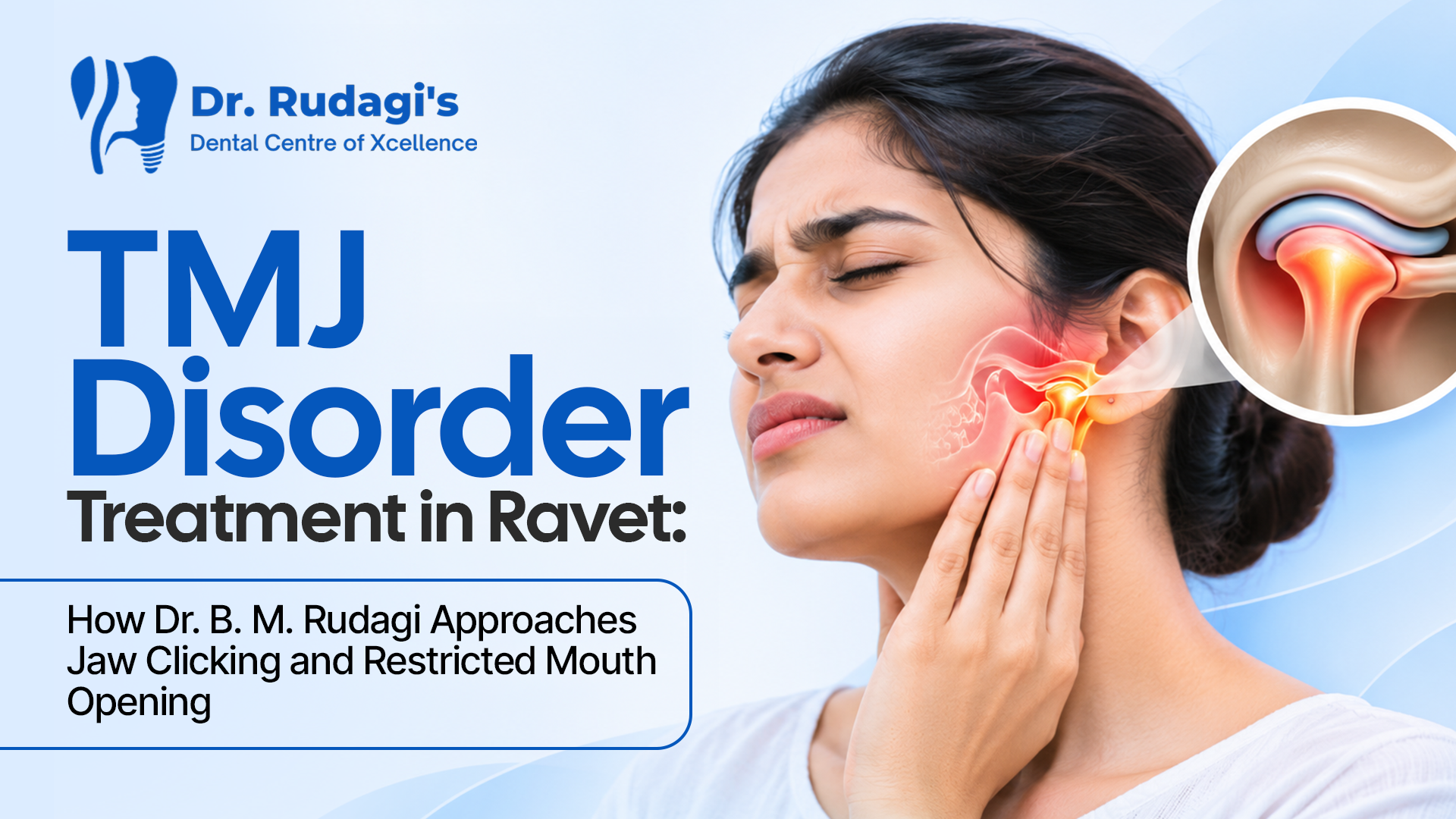
Have you noticed a clicking sound when you open your mouth? Do you experience jaw pain while chewing, or find it difficult to open your mouth fully? These symptoms may be related to a temporomandibular joint (TMJ) problem.
The temporomandibular joints connect your lower jaw to your skull and help you speak, chew, yawn and open your mouth. When the joints or surrounding muscles do not function properly, they can cause a group of conditions known as temporomandibular disorders (TMDs).
The good news is that many TMJ-related problems can be managed with appropriate care. However, the right treatment depends on the cause and severity of your symptoms.
If you are looking for TMJ Disorder Treatment, understanding your symptoms and getting an accurate diagnosis are important first steps. Dr. B. M. Rudagi, an Oral and Maxillofacial Surgeon in Ravet, focuses on conditions involving the jaw, face and related structures. Let us understand the possible causes, diagnosis and treatment options for jaw clicking and restricted mouth opening.
What Is a TMJ Disorder?
The temporomandibular joint is present on both sides of your face, just in front of your ears. It works with muscles, ligaments and a small cushioning disc to support smooth jaw movement.
TMJ disorders affect the joint, the surrounding muscles or both. They may develop due to several factors, including:
-
Jaw injury or trauma.
-
Excessive teeth grinding or jaw clenching.
-
Overuse of the jaw muscles.
-
Inflammation or arthritis affecting the joint.
-
Problems involving the position or movement of the joint disc.
-
Stress-related muscle tension.
In many cases, there may not be one clear cause. Symptoms can also differ from person to person.
It is important to understand that TMJ refers to the joint, while TMD refers to the disorders affecting the joint and related structures.
Why Does Your Jaw Click When You Open Your Mouth?
A clicking or popping sound while opening or closing your mouth is one of the common symptoms associated with TMJ disorders.
One possible reason is a change in the movement of the small disc inside the jaw joint. When the disc does not move smoothly with the joint, you may hear a clicking sound.
Other possible reasons include:
-
Changes in jaw joint movement.
-
Muscle tension around the jaw.
-
Joint inflammation.
-
Previous injury to the jaw.
-
Excessive clenching or grinding.
However, jaw clicking does not always mean you have a TMJ disorder. Painless clicking without restricted movement or other symptoms is common and may not require treatment.
If clicking is accompanied by pain, jaw locking, stiffness or difficulty chewing, a professional examination can help identify the cause.
What Causes Restricted Mouth Opening?
Restricted mouth opening means you cannot open your mouth as widely as usual. You may notice difficulty while eating, brushing your teeth, speaking or yawning.
Some possible causes include:
-
TMJ disc problems: Changes in disc movement may interfere with normal jaw movement.
-
Muscle spasms: Tight or painful jaw muscles can limit how far you open your mouth.
-
Joint inflammation: Inflammation may cause pain and stiffness.
-
Jaw injury: Trauma can affect the joint, muscles or surrounding tissues.
-
TMJ ankylosis: This is a condition in which abnormal joining or stiffness of the joint structures restricts jaw movement.
Restricted mouth opening should not automatically be assumed to be a TMJ disorder. Dental infections, muscle conditions and other problems can also cause similar symptoms.
If you suddenly cannot open or close your mouth, or have facial swelling, fever, difficulty swallowing or breathing, seek urgent medical attention.
How Does Dr. B. M. Rudagi Approach TMJ Disorder Treatment in Ravet?
Effective TMJ care begins with understanding why the jaw is not moving comfortably. Dr. B. M. Rudagi is listed as an Oral and Maxillofacial Surgeon with experience in jaw-related surgical conditions, including TMJ ankylosis treatment and joint replacement.
A suitable treatment plan should be based on the patient's symptoms, examination findings and diagnosis rather than using the same treatment for everyone.
1. Understanding Your Symptoms
We begin by understanding the patient's concerns, such as:
-
When did the jaw clicking or pain start?
-
Is the discomfort present on one side or both sides?
-
Does the jaw lock while opening or closing?
-
Is chewing or speaking difficult?
-
Have you experienced a previous jaw injury?
This information helps the specialist understand the nature and duration of the problem.
2. Clinical Examination
A physical examination may include checking jaw movement, mouth opening, joint sounds, muscle tenderness and facial discomfort.
The specialist may also examine the teeth, bite and surrounding structures to identify other possible causes.
3. Imaging When Required
Depending on the symptoms and examination, imaging may be recommended.
-
X-rays or CBCT scans: May help assess the bones and joint structure.
-
MRI: Can provide information about the soft tissues and position of the joint disc.
Not every patient needs imaging. The choice depends on the suspected condition and whether the results will help guide treatment.
4. Personalised Treatment Planning
Once the cause is identified, the specialist can discuss suitable treatment options. The plan may involve conservative care, medication, supportive appliances, minimally invasive procedures or surgery in selected cases.
TMJ Treatment Options: Which Approach May Be Suitable?
Not every patient with jaw clicking or restricted mouth opening needs surgery. Treatment usually begins with simpler, reversible methods whenever appropriate.
|
Treatment option |
How it helps |
When it may be considered |
|
Conservative care |
Reduces strain on the jaw through soft foods, warm or cold packs and habit changes |
Mild or early symptoms |
|
Medication |
Helps manage pain or inflammation when prescribed |
Pain and inflammation |
|
Physiotherapy |
Supports jaw movement and muscle function through guided exercises |
Muscle tightness and movement problems |
|
Oral splints |
May help protect teeth and manage clenching in selected patients |
Teeth grinding or clenching |
|
TMJ arthrocentesis |
Flushes the joint with fluid and may help reduce inflammation and improve movement |
Selected joint-related problems that have not improved with simpler care |
|
TMJ arthroscopy |
Uses a small camera and instruments to examine or treat problems inside the joint |
Selected persistent or complex joint conditions |
|
TMJ surgery |
Addresses specific structural problems, severe damage or conditions such as ankylosis |
Carefully selected cases |
The right option depends on the diagnosis. Arthrocentesis and arthroscopy are not necessary for every patient, and open surgery is generally reserved for specific conditions when less invasive approaches are unsuitable or unsuccessful.
TMJ Arthrocentesis vs TMJ Arthroscopy: What Is the Difference?
Patients with persistent jaw pain or restricted mouth opening may hear about these two minimally invasive procedures. Although both involve the jaw joint, they are performed differently.
|
Feature |
TMJ Arthrocentesis |
TMJ Arthroscopy |
|
Procedure |
Uses needles to flush the joint with sterile fluid |
Uses a small camera and specialised instruments |
|
Main purpose |
Helps remove inflammatory substances and release some adhesions |
Allows the surgeon to view and treat selected problems inside the joint |
|
Visual guidance |
Does not usually involve direct camera visualisation |
Provides direct visualisation through the camera |
|
Complexity |
Generally less involved |
More technically involved |
|
Suitability |
Selected patients with joint pain and movement restriction |
Selected patients with persistent or more complex joint problems |
Both procedures have potential benefits and risks. A specialist must decide whether either procedure is appropriate after examining the joint and considering other treatment options.
What Can You Do at Home to Support TMJ Pain Management?
Along with professional advice, some simple habits may help reduce unnecessary pressure on your jaw:
-
Choose soft foods temporarily if chewing causes discomfort.
-
Avoid chewing gum and biting your nails.
-
Avoid opening your mouth excessively wide.
-
Apply a warm or cold pack, depending on what feels comfortable.
-
Be aware of daytime jaw clenching and try to relax your jaw.
-
Follow exercises only when recommended by your healthcare professional.
Avoid forcing your mouth open or trying to unlock your jaw yourself. Do not start medication or use a dental splint without suitable professional advice.
When Should You Consult a TMJ Specialist in Ravet?
Occasional painless clicking may not need treatment. However, you should consider a professional evaluation if you experience:
-
Persistent jaw pain or tenderness.
-
Painful clicking or popping sounds.
-
Difficulty opening your mouth fully.
-
Jaw locking while eating or yawning.
-
Pain while chewing or speaking.
-
Frequent headaches or facial discomfort associated with jaw movement.
-
A noticeable change in your bite.
Early evaluation can help identify the underlying cause and prevent unnecessary treatments.
Why Consider Dr. B. M. Rudagi for Jaw Joint Evaluation in Ravet?
Choosing the right specialist is important when you experience ongoing jaw movement problems. Dr. B. M. Rudagi is an Oral and Maxillofacial Surgeon whose listed areas of specialisation include TMJ ankylosis treatment and joint replacement surgery.
For patients seeking TMJ treatment a consultation can help determine whether the symptoms are related to the jaw joint, surrounding muscles or another condition.
At Dr. Rudagi's Dental Centre of Xcellence, Ravet, patients can enquire about an evaluation for jaw clicking, restricted mouth opening and other jaw-related concerns. The appropriate treatment should always be decided after a clinical assessment.
Frequently Asked Questions
1. Is jaw clicking always a sign of TMJ disorder?
No. Painless clicking without pain or restricted movement is common and may not require treatment. However, clicking accompanied by pain, locking or difficulty opening the mouth should be evaluated.
2. What is the best treatment for restricted mouth opening?
The best treatment depends on the cause. Depending on the diagnosis, management may include medication, physiotherapy, habit changes, arthrocentesis or other procedures. A specialist examination is needed before choosing treatment.
3. Does every TMJ disorder require surgery?
No. Many TMJ conditions can be managed with conservative methods. Surgery is considered only for selected cases involving significant structural problems or severe symptoms that have not responded to appropriate treatments.
4. Is TMJ arthrocentesis painful?
The procedure is generally performed with appropriate anaesthesia to manage discomfort. Some soreness or temporary swelling may occur afterwards. Your surgeon can explain the procedure, recovery and possible risks based on your condition.
5. Where can I get TMJ Disorder Treatment in Ravet?
You can enquire about jaw joint evaluation and treatment options with Dr. B. M. Rudagi, an Oral and Maxillofacial Surgeon at Dr. Rudagi's Dental Centre of Xcellence in Ravet, Pune. The clinic can guide you on consultation availability and the next steps.
Restore Your Jaw Comfort with the Right TMJ Treatment
Jaw clicking, jaw pain and restricted mouth opening can affect everyday activities such as eating, speaking and yawning. Although these symptoms may be associated with TMJ disorders, they can also have other causes. An accurate diagnosis is therefore essential.
With TMJ treatment in Ravet the focus should be on identifying the underlying problem and selecting an appropriate treatment, starting with conservative care whenever suitable. More advanced procedures, such as arthrocentesis, arthroscopy or surgery, may be considered for selected cases.
Book for appointment today: 9371971396
Visit our website : https://drrudagi.com/
