
All on 4 vs All on 6 Dental Implants in Ravet Cost Benefits and Key Differences
All on 4 vs All on 6 Dental Implants in Ravet Cost Benefits and Key Differences
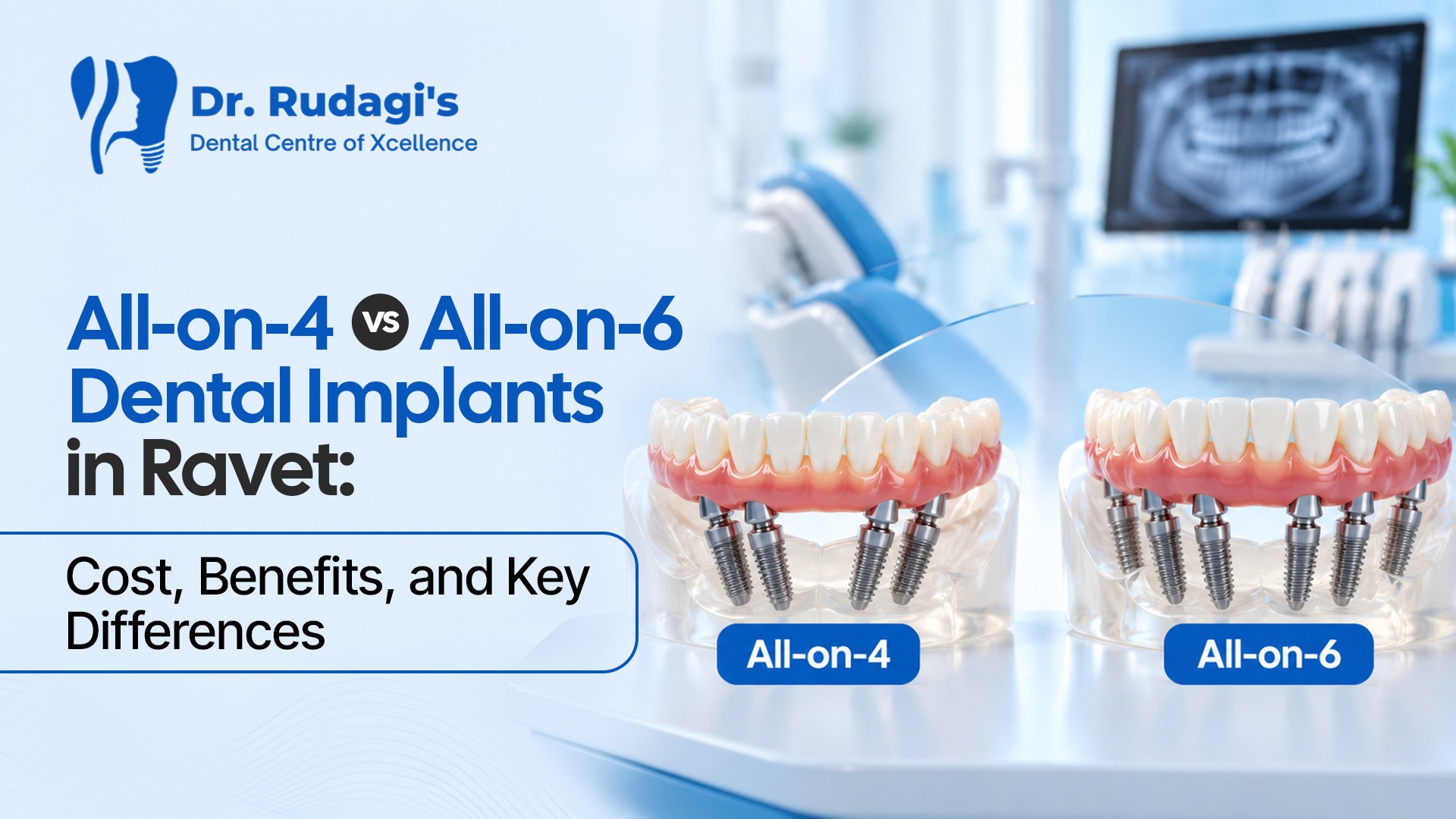
Losing several or all of our teeth can affect much more than our smile. It can make chewing difficult, change the way we speak, and sometimes make us avoid social situations. For patients who want a more stable alternative to removable dentures, full arch dental implants can be an option worth discussing.
Two commonly discussed solutions are All-on-4 and All-on-6 dental implants. Both use dental implants to support a complete arch of fixed teeth, but they differ in the number of implants used and how the treatment is planned.
If we are comparing All-on-4 vs All-on-6 Dental Implants in Ravet, it is important to look beyond the number of implants. Bone condition, gum health, bite, overall oral health, treatment goals, and budget all matter.
What Are All-on-4 Dental Implants?
All-on-4 is a full arch dental implant approach that uses four strategically positioned implants to support a complete set of replacement teeth.
Instead of placing an individual implant for every missing tooth, the implants are planned to support a full arch restoration. This can make All-on-4 an option for suitable patients who have lost many teeth or have teeth that cannot be saved.
One important point is that not every patient is automatically suitable for All-on-4. We need to assess the available jawbone, gums, bite, existing teeth, and overall oral health before recommending this approach.
Benefits of All-on-4
All-on-4 dental implants may offer:
-
A fixed alternative to removable dentures
-
Fewer implants compared with some other full arch approaches
-
Improved stability while eating and speaking
-
A complete smile restoration
-
A treatment plan that may suit some patients with reduced bone availability
-
Easier day-to-day confidence compared with loose dentures
The final result depends heavily on proper diagnosis, implant placement, prosthetic planning, and long-term maintenance.
What Are All-on-6 Dental Implants?
All-on-6 uses six dental implants to support a complete arch of replacement teeth. The additional implants can provide more points of support and help distribute chewing forces across the arch.
For patients with suitable bone volume and good oral health, All-on-6 can be considered when the dentist believes additional implant support would be beneficial.
However, using six implants does not automatically make it the better choice. The right treatment depends on each patient's individual anatomy and needs.
Benefits of All-on-6
Potential benefits include:
-
Additional implant support
-
Good distribution of biting forces
-
A stable foundation for a full arch restoration
-
A fixed solution for patients who are suitable candidates
-
An option for patients with sufficient bone support
A detailed examination is necessary before deciding whether All-on-6 is appropriate.
All-on-4 vs All-on-6 Dental Implants Key Differences
When comparing All-on-4 vs All-on-6 Dental Implants in Ravet, we should consider several factors rather than focusing only on implant numbers.
|
Feature |
All-on-4 |
All-on-6 |
|
Number of implants |
Four |
Six |
|
Treatment purpose |
Supports a full arch |
Supports a full arch |
|
Implant support |
Four strategically planned implants |
Six strategically planned implants |
|
Bone requirements |
May be suitable for some patients with reduced bone |
Usually requires adequate bone support |
|
Stability |
Can provide strong fixed support when properly planned |
Provides additional implant support |
|
Cost |
Often lower implant-related cost |
Usually higher because of additional implants |
|
Suitability |
Depends on bone, gums, bite and overall health |
Depends on bone, gums, bite and overall health |
|
Maintenance |
Requires regular implant and prosthesis care |
Requires regular implant and prosthesis care |
This comparison is only a general guide. We should not choose a treatment simply because it uses more or fewer implants. A clinical examination and appropriate imaging are essential.
Which Is Better All-on-4 or All-on-6?
There is no universal answer to whether All-on-4 or All-on-6 is better.
For some patients, four strategically placed implants may provide the support required for a full arch restoration. For others, six implants may be recommended because their bone condition and treatment plan allow or benefit from additional support.
For example, a patient with significant tooth loss and limited bone availability may be evaluated for an All-on-4 approach. Another patient with adequate bone and a need for additional implant support may be considered for All-on-6.
The decision should be based on diagnosis rather than simply choosing the option with more implants.
Who May Need Full Mouth Dental Implants?
Full mouth dental implants in Ravet may be considered by adults who have:
-
Lost most or all of their teeth
-
Multiple severely damaged or failing teeth
-
Difficulty chewing with missing teeth
-
Uncomfortable or unstable removable dentures
-
Advanced tooth loss affecting daily life
-
Suitable jawbone or a treatment plan to manage bone deficiencies
-
Healthy gums or gum disease that can be treated
Good oral hygiene and regular dental care remain important after implant treatment.
What Happens During All-on-4 or All-on-6 Treatment?
The exact treatment timeline varies from person to person, but the process generally involves several stages.
1. Dental Consultation
We first assess the teeth, gums, bite, jawbone and overall oral condition.
2. Digital Imaging
Dental X-rays or 3D CBCT imaging may be used to evaluate bone structure and plan implant placement.
3. Treatment Planning
The dentist determines the appropriate implant position, prosthesis design and overall treatment approach.
4. Implant Placement
The planned implants are surgically placed in the jaw under appropriate anaesthesia.
5. Temporary Teeth
Depending on the case, temporary teeth may be provided during the healing period.
6. Healing and Implant Integration
The implants need time to integrate with the surrounding bone. The timeline varies according to individual healing and treatment factors.
7. Final Fixed Teeth
Once the dentist confirms that the implants are ready, the final prosthesis can be fitted.
All-on-4 and All-on-6 Recovery and Maintenance
Some swelling, soreness or discomfort can occur after implant surgery. We should follow the dentist's instructions carefully during recovery.
Good long-term maintenance includes:
-
Brushing as recommended
-
Cleaning around the implants and prosthesis
-
Following the recommended diet during healing
-
Attending regular dental check-ups
-
Having professional maintenance when advised
-
Avoiding habits that may damage the implants or prosthesis
Implants are not completely maintenance-free. Proper daily care plays an important role in protecting the investment we make in our oral health.
All-on-4 and All-on-6 vs Traditional Dentures
Traditional dentures remain a useful option for many patients, but they are removable and can sometimes move while eating or speaking.
Implant-supported teeth are designed to provide greater stability because they are anchored to dental implants.
For patients who want fixed teeth implants, All-on-4 or All-on-6 may therefore be worth discussing with an implant dentist. However, implant treatment is more involved and usually requires a greater initial investment than conventional dentures.
The right choice depends on oral health, expectations, budget, bone condition and clinical suitability.
Why Choose an Implant Dentist in Ravet?
Choosing a dental clinic should involve more than comparing prices. We should look for a clinic that provides proper diagnosis, clear treatment planning and appropriate follow-up.
Before starting treatment, it is useful to ask:
-
What type of implant treatment is suitable for me?
-
Do I need All-on-4 or All-on-6?
-
Is bone grafting required?
-
What type of final teeth will I receive?
-
What is included in the total treatment cost?
-
What will my recovery involve?
-
How should I maintain the implants?
A clear consultation can help us understand the treatment instead of making a decision based only on advertisements or package prices.
Frequently Asked Questions (FAQS)
1. Is All-on-4 cheaper than All-on-6?
All-on-4 may have a lower implant-related cost because four implants are used instead of six. However, the final cost depends on the complete treatment plan, prosthesis, scans and any additional procedures required.
2. Is All-on-6 stronger than All-on-4?
All-on-6 provides six points of implant support, which can help distribute forces across the arch. However, this does not mean it is automatically better for every patient. The dentist should recommend the option based on individual bone and oral conditions.
3. Can All-on-4 be used if I have bone loss?
Some patients with bone loss may still be candidates for All-on-4, depending on the location and amount of available bone. A clinical examination and 3D imaging are important before making this decision.
4. How long do All-on-4 and All-on-6 implants last?
Dental implants can provide long-term service when they are properly placed and maintained. Regular dental visits, good oral hygiene, healthy gums and appropriate care of the prosthesis are important for long-term results.
5. How do I choose between All-on-4 and All-on-6 in Ravet?
The best option depends on your jawbone, gums, bite, oral health, treatment goals and budget. An implant dentist can evaluate these factors and explain which full arch treatment is appropriate for you.
Making the Right Choice for Your Smile
Choosing between All-on-4 vs All-on-6 Dental Implants in Ravet is an important decision, especially when we are investing in a long-term solution for missing or failing teeth.
All-on-4 can provide a practical full arch treatment using four strategically planned implants, while All-on-6 provides additional implant support for suitable patients. Neither option is universally right for everyone.
Rather than choosing based only on implant numbers or advertised prices, we should focus on proper diagnosis, treatment quality, prosthetic design, long-term maintenance and the experience of the dental team.
If you are considering full arch dental implants in Ravet, schedule a consultation to understand your bone condition, available treatment options and the complete cost involved.
Book for appointment today: 9371971396
Visit our website : https://drrudagi.com/
