
Painless Single-Sitting Root Canal in Ravet: How Microscope-Assisted Treatment Improves Precision
Painless Single-Sitting Root Canal in Ravet: How Microscope-Assisted Treatment Improves Precision
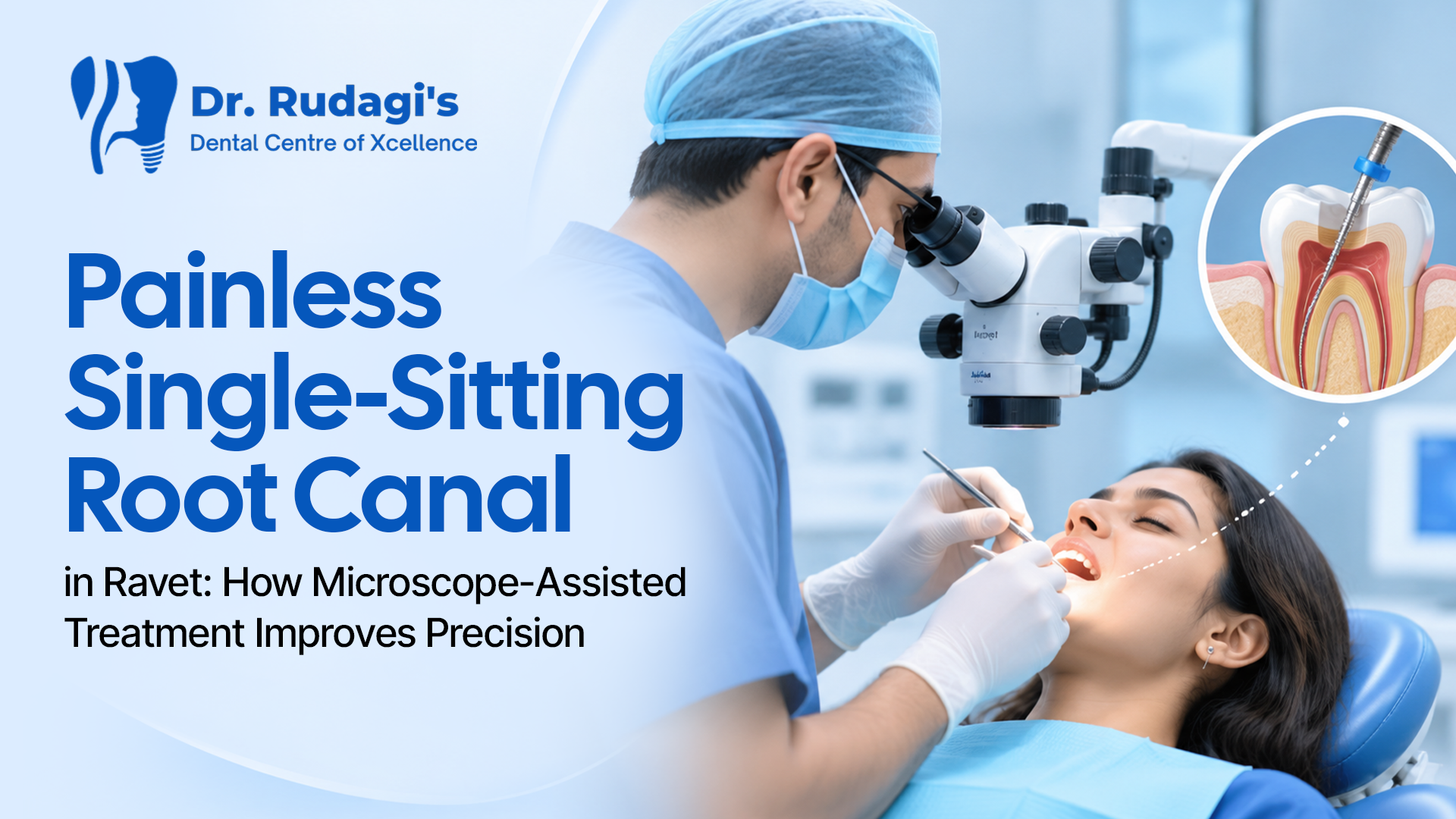
Tooth pain can make everyday activities like eating, drinking, and sleeping uncomfortable. When deep tooth decay or infection reaches the inner part of a tooth, root canal treatment may be needed to save it. However, many people delay treatment because they are worried about pain, multiple dental visits, and the procedure itself.
With advancements in modern dentistry, root canal treatment has become more comfortable and precise. One such advancement is microscope-assisted root canal treatment, which allows dentists to examine the inside of a tooth with greater magnification and visibility. In suitable cases, the entire procedure can also be completed in a single sitting.
At our dental clinic, we understand that patients want effective treatment without unnecessary discomfort or repeated visits. If you are considering a Painless Single-Sitting Root Canal, understanding how microscope-assisted technology works can help you make an informed decision about your dental health.
What Is Single-Sitting Root Canal Treatment?
Single-sitting root canal treatment is a dental procedure in which the infected or damaged pulp inside a tooth is removed, and the root canals are cleaned, shaped, disinfected, and sealed during one appointment.
The dental pulp contains nerves and blood vessels. When bacteria enter this area due to deep cavities, cracks, or dental injuries, they can cause infection and severe pain.
During root canal treatment, our dentist removes the infected pulp while preserving the natural tooth structure as much as possible. The cleaned canals are then filled with a suitable dental material to prevent further infection.
Unlike traditional root canal treatment, which may require two or more appointments, single-visit treatment aims to complete the necessary steps in one session.
However, not every tooth is suitable for single-sitting treatment. The decision depends on the severity of infection, canal anatomy, tooth condition, and the patient's overall dental health.
How Does Microscope-Assisted Root Canal Treatment Work?
A dental operating microscope is an advanced dental instrument that magnifies the treatment area and provides better illumination. It helps our dentist examine small details inside the tooth that may be difficult to identify with the naked eye.
Root canals can be extremely narrow, curved, and complex. Some teeth may also have additional canals or hidden anatomical structures. Treating these areas requires careful examination and precision.
During microscope-assisted root canal treatment, we follow these important steps:
1. Detailed Dental Examination
We begin by examining the affected tooth and understanding the patient's symptoms. Dental X-rays help us assess the root structure, infection, and surrounding bone.
2. Local Anaesthesia
We administer local anaesthesia to numb the affected area. This helps reduce discomfort during the procedure and allows patients to remain comfortable.
3. Accessing the Infected Pulp
A small opening is made in the tooth to reach the infected pulp chamber. The dental microscope helps our dentist examine the internal structure more clearly.
4. Cleaning and Shaping the Root Canals
The infected pulp and damaged tissues are carefully removed. Special dental instruments are used to clean and shape the root canals.
5. Disinfection and Sealing
The canals are disinfected and filled with a suitable biocompatible material. This helps prevent bacteria from entering the cleaned canals again.
6. Final Restoration
The opening is sealed with a dental filling. Depending on the amount of remaining tooth structure, a dental crown may be recommended to protect the treated tooth from breaking.
When the tooth condition allows, these steps can be completed during a single appointment.
How Does a Dental Microscope Improve Root Canal Precision?
Traditional root canal treatment mainly depends on the dentist's clinical examination, dental instruments, and X-ray images. Although these methods are effective, the complex internal structure of some teeth can make treatment challenging.
A dental microscope provides enhanced magnification and lighting, helping our dentist identify small details more clearly.
Here are some important ways it improves treatment precision:
-
Better Visibility: Magnification helps identify narrow, hidden, and additional root canals.
-
Improved Cleaning: Better visibility supports careful removal of infected tissue and debris.
-
Identifying Tiny Cracks: The microscope can help detect certain small cracks and defects in the visible tooth structure.
-
Preserving Natural Tooth Structure: Enhanced visibility supports more controlled access and careful removal of damaged tissue.
-
Finding Missed Canals: It helps locate canals that might otherwise be difficult to identify.
-
Improved Treatment Control: Better visualisation allows the dentist to work more carefully around delicate internal structures.
Microscope-assisted treatment does not guarantee a successful outcome, but it can improve the dentist's ability to examine and treat complex root canal anatomy.
Traditional vs Microscope-Assisted Root Canal Treatment
Both traditional and microscope-assisted root canal treatments aim to remove infected pulp, clean the canals, and preserve the natural tooth. The main difference is the level of magnification and visibility available during treatment.
|
Comparison Factor |
Traditional Root Canal |
Microscope-Assisted Root Canal |
|
Visibility |
Uses normal vision and available dental lighting |
Uses magnification and enhanced illumination |
|
Identifying Canals |
May be challenging in complex cases |
Helps identify narrow and hidden canals |
|
Treatment Precision |
Depends on clinical examination and instruments |
Enhanced visualisation supports greater precision |
|
Detecting Small Defects |
Some defects may be difficult to identify |
Helps examine certain small cracks and defects |
|
Complex Root Anatomy |
May require additional techniques |
Provides better visibility of complex anatomy |
|
Treatment Planning |
Based on examination and imaging |
Supported by magnified examination and imaging |
|
Patient Comfort |
Depends on anaesthesia and clinical technique |
Also depends on anaesthesia and clinical technique |
Microscope-assisted root canal treatment offers an additional level of visual support, especially when treating teeth with complicated root canal structures.
Can Root Canal Treatment Really Be Painless?
One of the biggest concerns patients have is whether root canal treatment will hurt. Modern dentistry uses local anaesthesia and advanced techniques to make the procedure more comfortable.
Before starting treatment, our dentist numbs the affected tooth and surrounding area. This helps prevent pain during the procedure. Patients may experience slight pressure or vibration while the dentist works, but sharp pain should not be expected.
In some cases, an infected tooth may be difficult to numb completely because of severe inflammation. Our dentist can assess the situation and use additional anaesthetic techniques when required.
After the procedure, mild tenderness or sensitivity may occur for a few days. This is generally manageable with dentist-recommended medication and proper care.
It is important to understand that painless treatment does not mean that every patient will have the same experience. Comfort depends on the infection, tooth condition, anaesthesia, and individual pain sensitivity.
Benefits of Single-Sitting Root Canal Treatment
For suitable patients, completing root canal treatment in one sitting can offer several advantages.
1. Fewer Dental Visits
Patients can complete the main root canal procedure in one appointment instead of returning for multiple cleaning and sealing sessions.
2. Saves Time
Single-visit treatment can be helpful for working professionals, busy parents, and people with limited availability.
3. Reduced Treatment Interruptions
Completing the procedure in one session reduces the need for temporary fillings between multiple root canal appointments.
4. Comfortable Treatment Experience
Modern anaesthesia, advanced dental instruments, and microscope-assisted visibility can help make the procedure more comfortable.
5. Helps Preserve Natural Teeth
Root canal treatment removes infected pulp while allowing patients to retain their natural tooth instead of extracting it.
6. Convenient Treatment Planning
Patients who are suitable for single-sitting treatment can complete the main procedure without planning multiple root canal appointments.
However, if the infection is severe, there is persistent drainage, or the root canal anatomy is particularly complex, our dentist may recommend multiple visits for appropriate treatment.
Who Needs Root Canal Treatment?
Root canal treatment is recommended when the dental pulp becomes infected or irreversibly damaged. Several dental conditions can lead to this problem.
Common signs and conditions include:
-
Deep Tooth Decay: Untreated cavities can spread deeper into the tooth and reach the pulp.
-
Persistent Toothache: Continuous or severe tooth pain may indicate inflammation or infection inside the tooth.
-
Sensitivity to Hot and Cold: Long-lasting sensitivity after exposure to hot or cold foods may suggest pulp damage.
-
Swollen Gums: Swelling, tenderness, or a pimple-like bump near a tooth may indicate a dental infection.
-
Cracked or Broken Teeth: Deep cracks can allow bacteria to enter the inner part of the tooth.
-
Dental Injuries: Accidents or injuries can damage the pulp, even when the tooth looks normal from outside.
-
Tooth Discolouration: Darkening of a tooth can sometimes indicate internal damage.
Not every toothache requires a root canal, Our dentist will examine the tooth, review the symptoms, and recommend suitable treatment based on the diagnosis.
How Long Does Single-Sitting Root Canal Treatment Take?
The duration of a single-sitting root canal depends on the tooth's location, number of canals, infection level, and complexity of its internal structure.
In general, a root canal appointment may take approximately 60–120 minutes, although some cases may require more time.
Front teeth usually have simpler root canal anatomy, while molars often have multiple canals that require additional attention.
Microscope-assisted treatment may help our dentist examine the internal structures more clearly, but it does not mean every procedure will be shorter.
If the tooth requires additional treatment or a dental crown, another appointment may be necessary for the final restoration.
Aftercare and Recovery Following Root Canal Treatment
Proper aftercare helps protect the treated tooth and supports recovery. Although root canal treatment removes the infected pulp, the surrounding tissues may remain slightly sensitive for a few days.
We recommend following these simple precautions:
-
Avoid chewing hard or sticky foods on the treated tooth until it has been permanently restored.
-
Choose soft foods if the tooth feels sensitive after treatment.
-
Maintain regular brushing and flossing to keep the treated area clean.
-
Follow the dentist's instructions regarding prescribed medicines.
-
Avoid biting hard objects such as ice, pens, or hard nuts with the treated tooth.
-
Attend follow-up appointments for permanent fillings or crown placement.
-
Contact your dentist if you experience increasing pain, swelling, fever, or symptoms that do not improve.
A dental crown may be recommended, particularly for molars and teeth with significant structural damage. It helps protect the remaining tooth structure from fractures during chewing.
Why Choose Advanced Root Canal Treatment in Ravet?
Choosing an experienced dentist is important when you need root canal treatment. The success of treatment depends on proper diagnosis, careful cleaning, effective disinfection, and appropriate restoration.
At our dental clinic, we focus on understanding each patient's dental concerns and recommending treatment according to their needs.
Microscope-assisted dentistry provides better visibility during procedures, helping us manage complex root canal structures with greater precision. We also focus on patient comfort, clear communication, and appropriate treatment planning.
Whether you have persistent tooth pain, deep cavities, or an infected tooth, seeking timely dental attention can help prevent the problem from becoming more complicated.
If you are searching for a Painless Single-Sitting Root Canal in Ravet, consult our dental team to understand whether single-visit microscope-assisted treatment is suitable for your condition.
Do not allow fear of dental treatment to delay the care your teeth need. Book your appointment with our dentist in Ravet and take the next step towards protecting your natural smile.
Frequently Asked Questions
1. Is single-sitting root canal treatment completely painless?
Root canal treatment is generally performed under local anaesthesia to minimise pain during the procedure. Patients may experience mild pressure or vibration. Some tenderness can occur after treatment, but it is usually temporary and manageable with dentist-recommended care.
2. Is microscope-assisted root canal treatment better than traditional root canal treatment?
Microscope-assisted treatment provides enhanced magnification and lighting, helping dentists identify narrow canals, hidden structures, and certain small defects. It can be particularly useful in complex cases. However, the best treatment approach depends on the patient's tooth condition and the dentist's clinical assessment.
3. Can every root canal be completed in one sitting?
No. Single-sitting treatment is suitable for many cases, but not all. The severity of infection, presence of drainage, canal anatomy, and overall tooth condition influence the treatment plan. Some patients may require multiple appointments.
4. How long does recovery take after a single-visit root canal?
Most patients can return to their normal daily activities soon after treatment. Mild tenderness or sensitivity may continue for a few days. Following aftercare instructions and avoiding hard foods on the treated tooth can support recovery.
5. How much does microscope-assisted root canal treatment cost in Ravet?
The cost depends on the tooth being treated, the complexity of the root canal, the technology used, and whether a dental crown is required. We recommend consulting our dentist in Ravet for a clinical examination and an accurate treatment estimate.
Get Expert Care with Advanced Root Canal Technology in Ravet
Our advanced root canal treatment in Ravet combines modern dental technology, microscope-assisted precision, and patient-focused care to provide a comfortable treatment experience. We focus on accurate diagnosis, effective infection removal, and preserving your natural teeth.
If you are experiencing persistent tooth pain, deep cavities, or signs of dental infection, do not delay treatment. Choosing Painless Single-Sitting Root Canal in Ravet can be a convenient option when your tooth condition allows it. At our dental clinic, we focus on advanced technology, careful treatment planning, and patient comfort.
Book for appointment today: 9371971396
Visit our website : https://drrudagi.com/
