
Dental Crown Treatment by Dr. Kavita Rudagi: Everything Patients Near Ravet Should Know
Dental Crown Treatment by Dr. Kavita Rudagi: Everything Patients Near Ravet Should Know
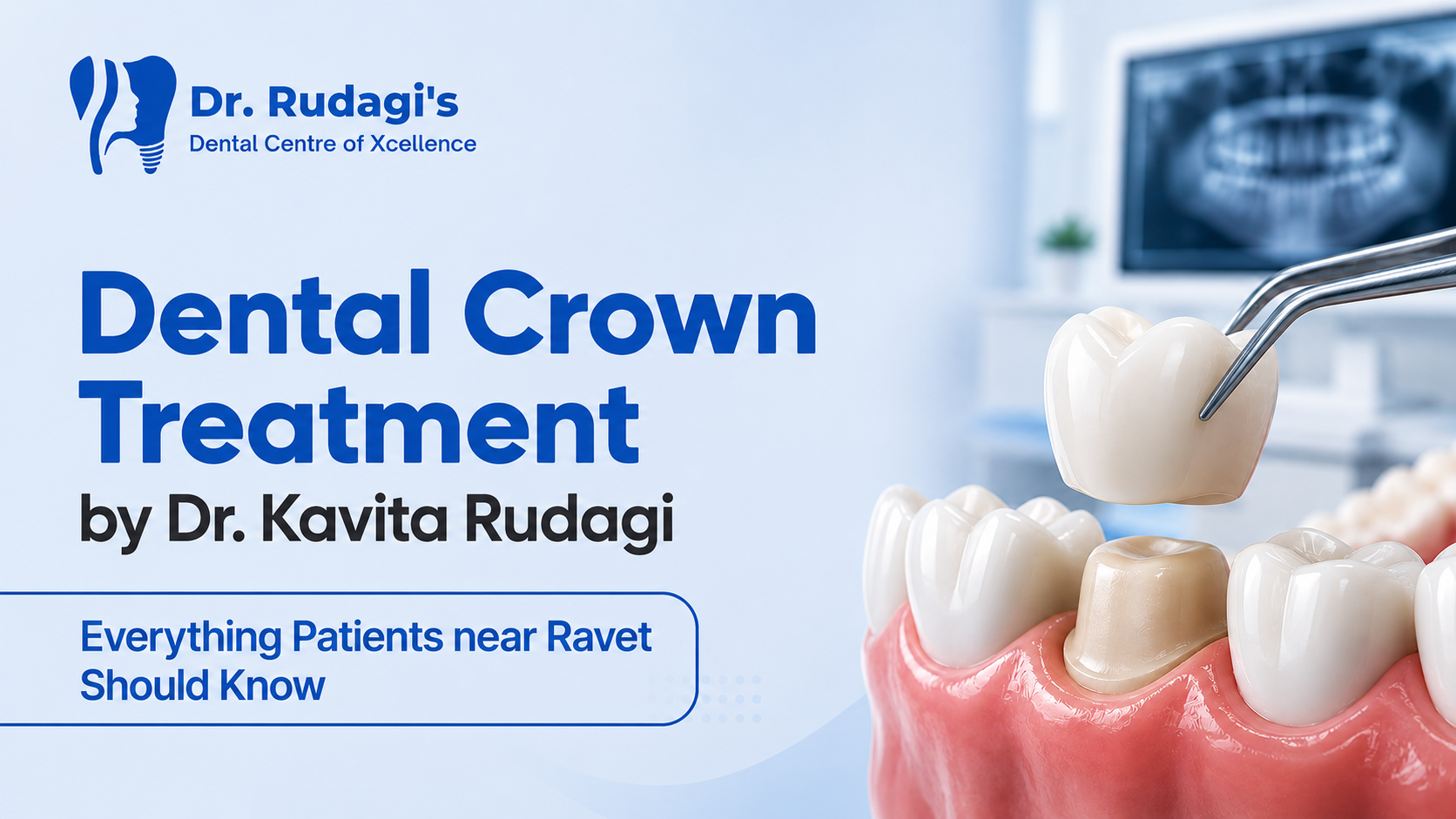
A damaged, cracked, weak, or heavily filled tooth can affect much more than your smile. It may make chewing uncomfortable, cause sensitivity, or leave you worried that the tooth could break further. In some cases, the tooth may have already undergone root canal treatment and need extra protection.
This is where Dental Crown Treatment in Ravet can play an important role. A dental crown, often called a tooth cap, is designed to cover and protect a weakened or damaged tooth while restoring its shape, function, and appearance. At the clinic of Dr. Kavita Rudagi, patients can discuss their tooth condition, treatment options, and the type of crown that may be appropriate for their needs.
Whether we are treating a broken tooth, a severely damaged tooth, or a tooth after root canal treatment, the right approach begins with understanding the condition of the tooth rather than simply choosing a crown.
How a Dental Crown Protects a Weak Tooth?
A dental crown is a custom-made restoration that fits over a prepared tooth. It helps protect the remaining tooth structure and allows the tooth to function more normally.
We may recommend a crown when a tooth has:
-
A large filling with limited natural tooth structure remaining
-
Significant cracks or damage
-
A broken or chipped portion
-
Severe decay
-
Considerable wear
-
Discoloration that cannot be corrected with simpler treatments
-
Undergone root canal treatment
For example, if a tooth has a large filling and only thin walls remain, placing another filling may not provide enough support. A crown can cover the remaining structure and help protect it from further damage.
When Does a Tooth Really Need a Crown?
Not every damaged tooth automatically needs a crown. The decision depends on the amount of healthy tooth structure remaining, the location of the tooth, your bite, and your overall oral health.
Dental Crown for a Broken or Cracked Tooth
A broken tooth can sometimes be repaired with a filling or bonding. However, when a significant portion of the tooth is damaged, a crown may provide better coverage and protection.
A Dental Crown for Broken Tooth treatment is especially considered when the remaining tooth needs additional structural support.
Dental Crown for a Damaged Tooth
Deep decay, old fillings, repeated dental procedures, or excessive wear can weaken a tooth. In such situations, Dental Crown for Damaged Tooth treatment may help restore its strength and shape.
Dental Crown After Root Canal
Root canal treatment removes infected tissue from inside the tooth, allowing the tooth to be preserved. However, the remaining tooth may require additional protection.
A Dental Crown After Root Canal is often recommended for teeth that have lost significant structure, particularly back teeth that experience considerable chewing forces.
From Tooth Preparation to Final Crown Placement
Many patients feel nervous because they do not know what will happen during treatment. Understanding the process can make the experience more comfortable.
Step 1: Dental Examination
We first examine the tooth and surrounding tissues. Depending on the situation, dental X-rays may be recommended to assess the roots and supporting structures.
Step 2: Treatment Planning
We determine whether a crown is actually required and discuss suitable options based on the tooth's location, condition, appearance, bite, and budget.
Step 3: Tooth Preparation
The tooth is carefully shaped to create enough space for the crown. Local anaesthesia may be used to keep the procedure comfortable.
Step 4: Crown Placement
A temporary crown may be provided when required while the final restoration is being prepared. Once the permanent crown is ready, its fit, bite, shape, and appearance are checked before it is placed.
Step 5: Bite and Comfort Check
A crown should feel natural when you bite. We make necessary adjustments so that it does not interfere with your normal bite.
Finding the Best Crown Material for Your Smile
There is no single crown material that is ideal for every patient. The choice depends on factors such as whether the tooth is in the front or back, aesthetic expectations, bite forces, available tooth structure, and individual treatment requirements.
|
Crown Option |
Appearance |
Common Consideration |
Often Suitable For |
|
Porcelain Crown |
Natural-looking |
Strong aesthetic appeal |
Visible teeth |
|
Zirconia Crown |
Natural-looking and durable |
High strength |
Front and back teeth depending on case |
|
Other Metal-Based Options |
Less tooth-like appearance |
Strength and function |
Selected cases |
|
Tooth-Coloured Crowns |
Designed to blend with teeth |
Cosmetic appearance |
Patients prioritising aesthetics |
A Porcelain Dental Crown may be considered when appearance is a major concern. A Zirconia Dental Crown is another popular option because of its strength and tooth-coloured appearance.
Instead of choosing a crown based only on online recommendations, we should evaluate the individual tooth and explain why a particular option may be appropriate.
What to Expect Once Your Crown Is Placed?
Most patients can return to their normal routine relatively quickly, although the tooth may feel slightly different at first.
During the initial period, we may notice mild sensitivity or a feeling that the crowned tooth is different from the surrounding teeth. This generally settles as we become accustomed to the restoration.
Good Dental Crown Recovery also involves following the instructions provided by the dental team and maintaining regular oral hygiene.
If we experience persistent pain, significant sensitivity, swelling, or a crown that feels loose or unusually high when biting, we should contact the dentist rather than ignoring the symptoms.
How Long Can a Dental Crown Protect Your Tooth?
There is no guaranteed lifespan because crowns are affected by oral hygiene, biting forces, habits, the condition of the underlying tooth, and regular dental care.
A well-maintained crown can provide long-term service, but it is not indestructible. Habits such as biting hard objects, chewing ice, or using teeth to open packages can increase the risk of damage.
Regular dental examinations help us monitor both the crown and the tooth underneath it.
Simple Habits That Help Protect Your Crown
Taking care of a crown is similar to caring for natural teeth.
We should:
-
Brush twice a day using fluoride toothpaste
-
Clean between teeth every day
-
Avoid chewing very hard objects
-
Follow good oral hygiene habits
-
Attend regular dental check-ups
-
Tell our dentist if the crown feels loose or uncomfortable
-
Address grinding or clenching if it is affecting our teeth
A crown covers the tooth, but it does not make the surrounding gums or the underlying tooth immune to dental problems. Dental Crown Maintenance remains important for long-term oral health.
How Dental Crowns Can Transform a Damaged Tooth?
The appearance before and after crown treatment can vary considerably depending on the condition of the original tooth.
A damaged or heavily discolored tooth may look more complete and natural after restoration. However, the goal is not simply cosmetic improvement.
A properly planned crown should also support normal function, provide suitable coverage, and fit comfortably with the surrounding teeth.
When patients search for Dental Crown Before and After results online, they should remember that every smile and every tooth is different. Photos can provide general information, but they cannot determine which crown is suitable for an individual patient.
What to Look for When Choosing a Dentist in Ravet?
Choosing a dentist for restorative treatment is about more than selecting a crown material.
At Dr. Kavita Rudagi's clinic, the focus should begin with understanding the patient's dental problem and explaining the available treatment choices clearly. Whether we are considering a Tooth Cap Treatment in Ravet for a broken tooth, a damaged tooth, or protection after root canal treatment, proper diagnosis is an important first step.
Patients should feel comfortable asking questions such as:
-
Why do I need a crown?
-
Can my tooth be treated without a crown?
-
Which crown material is appropriate for my tooth?
-
What will the treatment involve?
-
How should I care for the crown afterward?
-
What factors affect the treatment cost?
Clear communication helps patients make informed decisions about their dental care.
Understanding Whether Your Tooth Needs a Crown
A crown can be an excellent restorative option when a tooth has lost substantial structure and needs protection. However, it is not automatically the best solution for every chipped, discolored, or damaged tooth.
Depending on the condition, alternatives may include a filling, bonding, veneer, inlay, onlay, or other restorative treatment.
That is why a professional dental examination matters.
If you have a broken tooth, large filling, cracked tooth, severely damaged tooth, or a root canal treated tooth, discussing your options with Dr. Kavita Rudagi can help you understand whether Dental Crown Treatment in Ravet is appropriate for your situation.
Frequently Asked Questions
1. Is dental crown treatment painful?
The tooth preparation procedure is generally performed using local anaesthesia to improve comfort. Some patients may experience temporary sensitivity or mild discomfort afterward. If discomfort persists or becomes severe, we should consult the dentist.
2. Do all root canal treated teeth need crowns?
Not necessarily. The need for a crown depends on how much natural tooth structure remains and which tooth has been treated. Back teeth often require additional protection because they experience significant chewing forces.
3. Which is better, porcelain or zirconia crowns?
Both can be useful depending on the individual case. Porcelain crowns can offer a highly natural appearance, while zirconia crowns are known for strength and tooth-coloured aesthetics. The appropriate choice depends on the tooth, bite, appearance requirements, and clinical assessment.
4. How long do dental crowns last?
There is no fixed lifespan for every crown. Longevity depends on oral hygiene, bite forces, habits, the condition of the underlying tooth, crown quality, and regular dental care.
5. How much does a dental crown cost in Ravet?
The cost varies depending on the crown material, condition of the tooth, preparation required, and whether additional treatment such as root canal therapy is needed. A dental examination is the best way to receive an appropriate treatment plan and cost estimate.
Protecting Your Tooth Starts With the Right Decision
A damaged tooth does not always mean that extraction is the only option. In many situations, restorative dentistry can help us preserve and protect the natural tooth.
The key is choosing treatment based on the actual condition of the tooth rather than simply selecting the cheapest or most popular option.
If you are looking for Dental Crown Treatment in Ravet, Dr. Kavita Rudagi can assess your tooth, explain the available options, and help you understand what may be suitable for your smile and oral health.
When a tooth needs protection, the right crown is not just a cap over the tooth. It is part of a carefully planned approach to restoring comfort, function, and confidence.
Book for appointment today : 9371971396
Visit our website : https://drrudagi.com/
